Starting a cannabis brand often creates a packaging challenge: you want the product to look professional, but your first order may only be 1,000, 2,000 or a few thousand units.
Large-scale custom packaging can create a strong brand image, but many emerging brands are not ready for high minimum order quantities, tooling costs or thousands of unused packages sitting in storage.
This is why low-MOQ cannabis packaging is important for startups, regional brands and companies testing new products. Instead of immediately investing in a completely new structure, brands can begin with digitally printed Mylar bags, custom paper boxes, stock containers with labels or other practical formats.
The goal is not simply to find the cheapest package. The goal is to choose a packaging solution that matches the current stage of the product while leaving room for future growth.
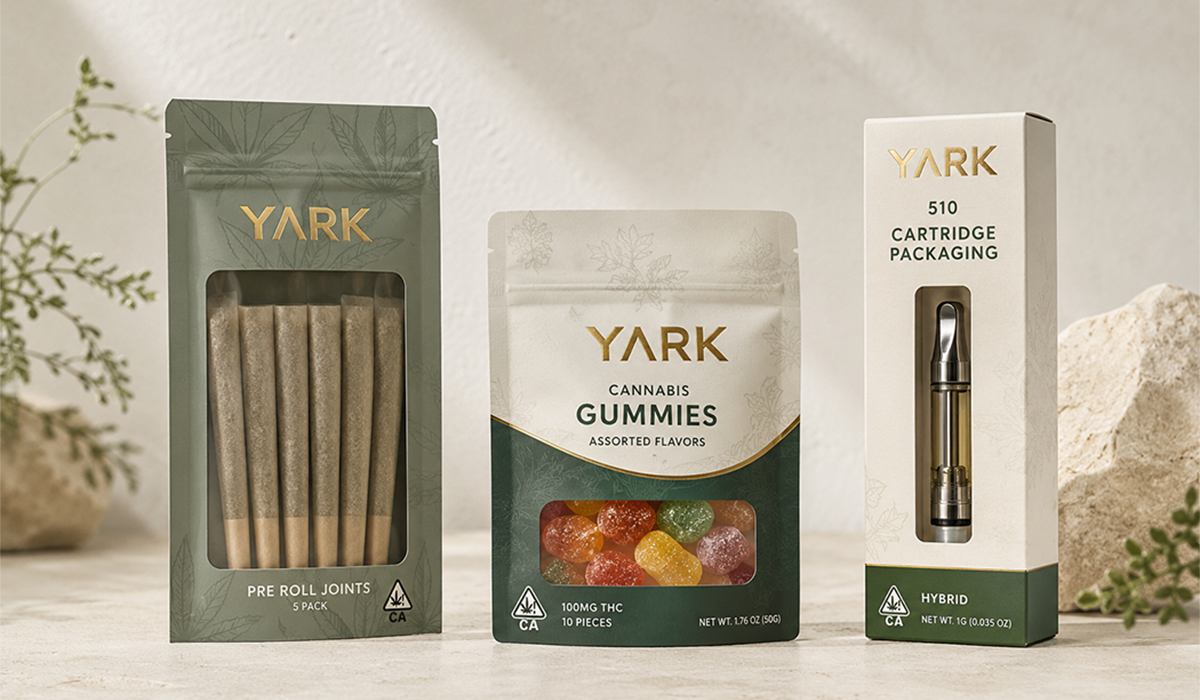
Many new cannabis brands begin with limited product launches, a small number of SKUs or regional market testing. At this stage, committing to tens of thousands of custom packages can create unnecessary financial pressure.
Packaging is also different from ordinary inventory. If the artwork changes, compliance information needs to be updated or a product line is discontinued, unused printed packaging may become expensive waste.
A flexible packaging strategy helps control several important risks:
Initial packaging investment and development cost
Unused inventory before product demand is confirmed
Artwork changes between different strains, flavors or SKUs
Possible changes to compliance information
The ability to improve packaging as the brand grows
Many startup cannabis brands do not know which strains, product sizes, flavors or packaging styles will become their best sellers during the first launch.
A smaller packaging run allows the brand to evaluate customer response, retail feedback and product performance before committing to a larger production program.
For example, a flower brand may begin with digitally printed Mylar bags for several strains, then upgrade the strongest-selling products to premium jars, paper boxes or more customized structures after sales become predictable.
One common mistake is developing highly customized packaging before the product direction is stable.
A package may look impressive, but if the product formula, strain name, compliance text, barcode or branding changes later, the remaining printed units may no longer be usable.
Starting with a flexible packaging solution can reduce this risk while allowing the brand to improve its presentation step by step.
The meaning of “low MOQ” changes depending on the packaging material, printing process and structure. A low quantity for a Mylar bag may not be practical for a custom tin or a completely new molded container.
| Packaging Option | Typical Starting Quantity | Suitable Applications | Main Consideration |
| Stock Packaging with Labels | Depends on available stock and label quantity | Product testing, samples and very small launches | Limited structural and color choices |
| Digitally Printed Mylar Bags | Around 1,000 pieces | Flower, pre-rolls, gummies and multiple-SKU launches | Unit price is usually higher than larger gravure-printed runs |
| Custom Paper Boxes | Usually around 2,000 pieces | Vape cartridges, disposable devices, pre-rolls and edibles | More flexible dimensions than tins or molded containers |
| Custom Paper Tubes | Usually around 2,000 pieces | Pre-roll joints and 510 cartridges | Compact and lightweight, but not suitable for every product |
| Custom Tin Packaging | Usually around 3,000–5,000 pieces, depending on the structure | Premium pre-rolls, edibles and concentrate products | Setup and manufacturing costs are more practical at higher quantities |
| Larger Tin Production | 10,000 pieces or more | Stable product lines and larger regional launches | Usually provides more competitive unit pricing |
These quantities are general production references rather than fixed rules. Final MOQ depends on package dimensions, material, printing method, child-resistant structure, number of designs and whether an existing mold or stock format can be used.
Low-MOQ packaging can be divided into three practical levels. Understanding these levels makes it easier to compare cost, customization and development time.
For brands that need the lowest entry cost and fastest launch, stock packaging combined with custom labels, sleeves or stickers can be an effective starting point.
This approach uses an existing bag, jar, tube or container and adds custom branding, product information and required label content.
Low initial packaging investment
Faster preparation for a new product launch
Less unused printed packaging inventory
Labels can be changed for different strains, flavors or SKUs
Suitable for early product testing and sample programs
This can be especially useful when a brand expects product names, barcodes or compliance information to change during the first stage of development.
Stock packaging provides less control over dimensions, colors, materials and opening structures. The available container may also be slightly larger or smaller than the ideal size for the product.
Label application quality also matters. Misaligned labels, bubbles, lifted edges or visible seams can reduce the overall presentation, especially for premium products.
A label cannot add child-resistant functionality to a non-child-resistant package. When a child-resistant structure is required, the function must come from the bag, closure or container itself and should be evaluated for the intended market.
This level uses a proven packaging format while customizing the size, printed artwork, colors, finishes or internal components. It offers stronger branding than stock packaging without requiring a completely new structure.
Common examples include printed Mylar bags, custom paper boxes, paper tubes and existing tin structures with customized printing.
Printed Mylar bags are one of the most practical low-MOQ options, especially for flower, pre-rolls, gummies and other products that benefit from lightweight packaging.
Digital printing can support quantities of around 1,000 pieces, making it suitable for smaller launches and multiple designs. At larger quantities, gravure printing can provide more competitive unit pricing.
For customized sizes, printing options, zipper structures and child-resistant formats, see our custom cannabis Mylar bags.
Paper boxes are often more flexible than rigid containers when a brand needs custom dimensions for a smaller production run. A starting quantity of around 2,000 pieces may be practical for many standard box projects.
Paper packaging can be developed around cartridges, disposable devices, pre-roll packs, gummies or other compact products. It can also support custom inserts, windows, surface finishes and different opening styles.
Paper tubes may also be suitable for pre-roll joints and 510 cartridges when the product is narrow and compact. Their small size can help reduce shipping volume, although they are not the best choice for every product category.
Brands that want stronger protection and a more premium presentation can use an existing tin structure and customize the printed design, color, finish and internal tray.
This is usually more practical than developing a completely new tin shape. Depending on the structure, a custom tin program may begin around 3,000–5,000 pieces, while 10,000 pieces or more normally provides better unit pricing.
Fully custom packaging provides the highest level of differentiation, but it usually requires more investment, a longer development process and a larger production commitment.
This option is generally more suitable for brands with stable sales, established product lines or a clear long-term packaging strategy.
A fully customized structure becomes valuable when the packaging is part of the brand identity rather than simply a container.
Custom development may include:
Unique package dimensions designed around the product
New opening, sliding or locking structures
Custom tin shapes or child-resistant mechanisms
Special inserts for product organization and protection
Private mold development for unique container shapes
Coordinated packaging systems for several related products
Fully customized development is usually best considered after product demand, branding and compliance information are reasonably stable.
| Factor | Stock Packaging + Labels | Custom Printing on Standard Structure | Fully Custom Structure |
| Typical MOQ | Lowest, depending on available stock | Usually around 1,000–5,000 pieces, depending on material | Project-specific and normally higher |
| Initial Investment | Lowest | Moderate | Highest due to development and possible tooling |
| Brand Differentiation | Limited | Strong visual customization | Highest structural and visual differentiation |
| Launch Speed | Fastest | Moderate | Longer development cycle |
| Best For | Samples, very small launches and early product testing | Growing brands that need professional custom presentation | Established brands and long-term premium product lines |
Different cannabis products have different packaging requirements. The most suitable low-MOQ solution depends not only on budget, but also on product protection, package dimensions and child-resistant requirements.
For flower products, digitally printed Mylar bags are often a practical starting point because they provide flexible sizing, barrier protection and efficient shipping.
Premium flower brands may later move toward glass jars or more customized packaging after the product position and sales volume become established.
Pre-roll brands need to balance protection, sealing, presentation and pack count. Paper boxes and tubes can be more flexible for lower quantities, while tins usually become more commercially practical at higher order volumes.
Paper boxes can support different one-pack, three-pack, five-pack or larger arrangements without requiring a new metal mold for every size.
Explore our custom pre-roll packaging options, including paper boxes, tubes, pouches and tin cases.
Gummies, chocolates and other edible products can use pouches, paper boxes or tins depending on the product size, quantity and required opening structure.
A correctly sized package helps reduce empty space and unnecessary material while improving how the product is presented.
See more cannabis edible packaging options for gummies, chocolates and other products.
Concentrate products are often small, so the outer packaging should be designed around the actual jar or container instead of using an oversized box.
Compact paper boxes, small tins and pouches may all be considered depending on the primary container, brand position and child-resistant requirements.
For vape products, packaging should be developed around the exact cartridge or device dimensions. Oversized boxes and unnecessary inserts can increase cost without improving protection.
Brands developing new devices can compare different vape cartridge packaging formats based on order quantity, device size and target market.
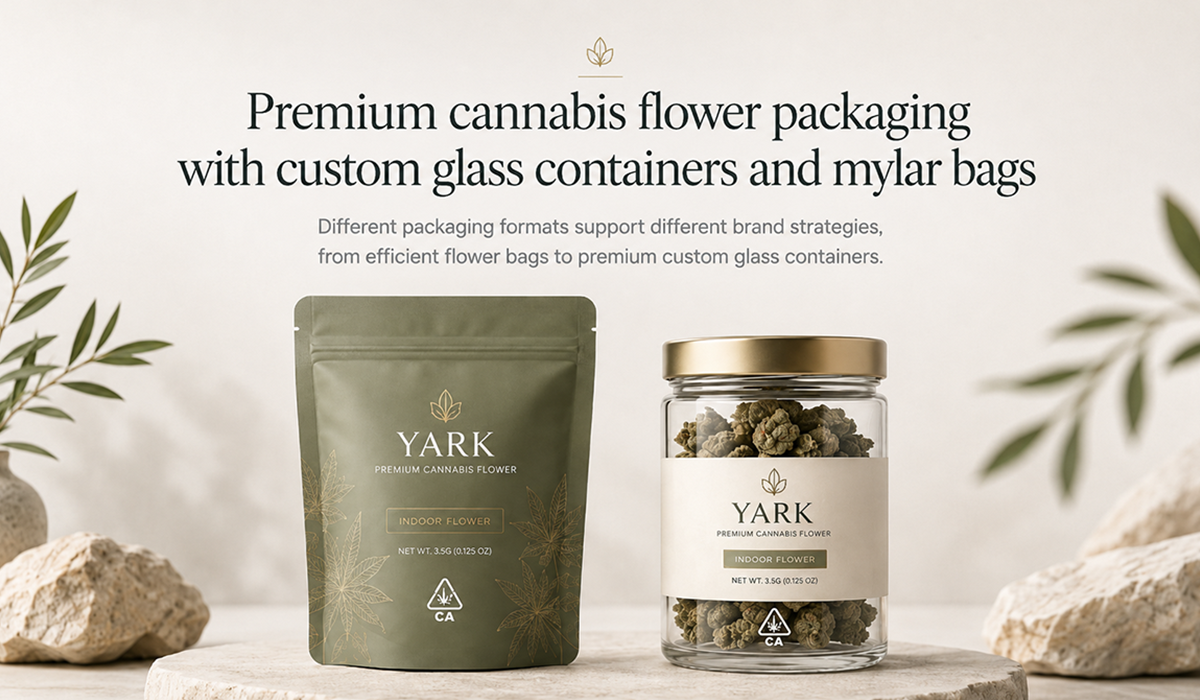
At around 1,000 pieces, digitally printed Mylar bags are often one of the most practical fully printed options. Stock containers with custom labels may also be considered for smaller tests.
This quantity is suitable for a limited launch, one or two main SKUs or a brand that expects the artwork to change after testing.
At around 2,000 pieces, custom paper boxes and paper tubes become more practical. This quantity can support custom dimensions, printed artwork and selected surface finishes without requiring a very large production commitment.
It is often suitable for cartridge boxes, disposable vape boxes, pre-roll boxes and compact edible packaging.
At approximately 3,000–5,000 pieces, brands can consider a wider range of customized structures. Some tin packaging projects may become possible, depending on the dimensions, printing process and whether an existing mold is available.
This range is more suitable for products with confirmed demand and a clearer long-term packaging direction.
At 10,000 pieces or more, custom tin pricing usually becomes more competitive because production setup and manufacturing costs are spread across a larger quantity.
Larger volumes are also more suitable for stable product lines, coordinated SKU programs and packaging that will remain in use for a longer period.
A total order of 5,000 pieces does not always mean that five different designs can be produced at 1,000 pieces each under the same conditions.
Different artworks may require separate printing setup, plates, samples or production arrangements. The answer depends on the material and printing method.
Digital printing is generally more flexible for several low-volume designs, while gravure printing and metal packaging usually become more efficient when each design has a larger quantity.
Brands planning several strains or flavors should confirm both the total order quantity and the minimum quantity per design before finalizing artwork.
A low-MOQ strategy does not mean using low-quality packaging. It means selecting a structure and printing process that match the current stage of the business.
A correctly sized printed bag, well-produced paper box or neatly applied label can still create a professional customer experience.
Many successful brands improve their packaging gradually:
Start with flexible packaging for market testing
Identify the strongest-selling products and SKUs
Improve materials, printing or finishes when demand becomes stable
Upgrade to more customized structures when volume supports the investment
Develop unique molds only when long-term differentiation justifies the cost
Before selecting a packaging format, it helps to answer a few practical questions:
Is the product still being tested?
Products that may change soon usually benefit from more flexible packaging and smaller printed runs.
How many SKUs or designs are included?
Several low-volume designs may require a different printing strategy than one design with a larger quantity.
Does the packaging need a child-resistant structure?
Child-resistant requirements may limit available stock options and affect MOQ, development time and cost.
Is this primary or secondary packaging?
A pouch or jar that directly holds the product has different requirements from an outer paper box used mainly for branding.
Is the artwork likely to change?
Brands expecting changes to compliance text, flavors or branding should avoid ordering excessive printed inventory.
What quantity is expected for the next order?
The first package should support the current launch without making future scaling unnecessarily difficult.
Choosing low-MOQ packaging requires more than comparing unit prices. The package needs to match the product dimensions, number of designs, target market, required opening structure and expected future volume.
YARK helps cannabis brands compare practical options such as digitally printed Mylar bags, custom paper boxes, paper tubes, existing tin structures and fully customized packaging.
We can also help evaluate whether it is better to begin with a lower-volume format or move directly into a larger production run for more competitive unit pricing.
The best packaging investment is not always the most customized option. It is the option that fits the current product while supporting the next stage of growth.
Share your product type, target quantity, number of SKUs, package dimensions and child-resistant requirements. YARK can help compare suitable bags, paper boxes, tubes and tin packaging before you commit to production.
Get a Packaging Recommendation