Child Resistant Tin Case Solutions
If you’re choosing a child resistant tin case for cannabis products, the real challenge usually isn’t “tin or not tin” — it’s picking the right format. Pack count, opening style, insert material, mold availability, and decoration all affect how the product sits, how it ships, and how it looks on a dispensary shelf.
Tin cases are especially popular for pre-roll joints, gummies, mints, infused candies, and compact cannabis collections. They feel sturdy, reusable, and premium in hand — without taking up too much retail space.
If you’re still comparing formats, these pages can help you browse tin structures, pre-roll packaging options, and real product references.
Tin packaging is not always the cheapest option, but it solves a specific set of retail problems very well. For brands selling premium pre-rolls, gummies, mints, or limited drops, a tin case gives the product more structure, better shelf presence, and a reusable feel.
Rigid metal helps reduce crushing, bending, and product movement during shipping, storage, and retail handling.
A clean open-close experience makes tins feel more premium than basic pouches or lightweight paper sleeves.
Many consumers keep tins after first use, which keeps your brand visible longer than single-use packaging.
Tin cases can hold multiple units neatly without creating bulky shelf packaging.
Different cannabis products often require different tin structures. Hinged tins are commonly used for multi-pack pre-rolls, sliding tins work well for premium collections, and round tins are widely used for gummies, mints, and infused candies.
Most brands choose tin packaging when they want stronger shelf presentation, reusable packaging, and a more premium retail experience without creating bulky packaging formats.
Different products and pack counts work better with different tin styles. A 5-pack pre-roll program may need a different layout than a gummy tin or a multi-strain gift set. Below are the three most common child resistant tin case structures used in cannabis packaging.

Hinged tins are a strong choice for multi-pack pre-rolls, especially 3-pack, 5-pack, and 10-pack layouts. The flip-top format creates a clear reveal when the case opens and works well with paperboard or tray inserts.
This format is often used when brands want a stable insert, a familiar opening motion, and a clean retail presentation.
View Hinged Tin Cases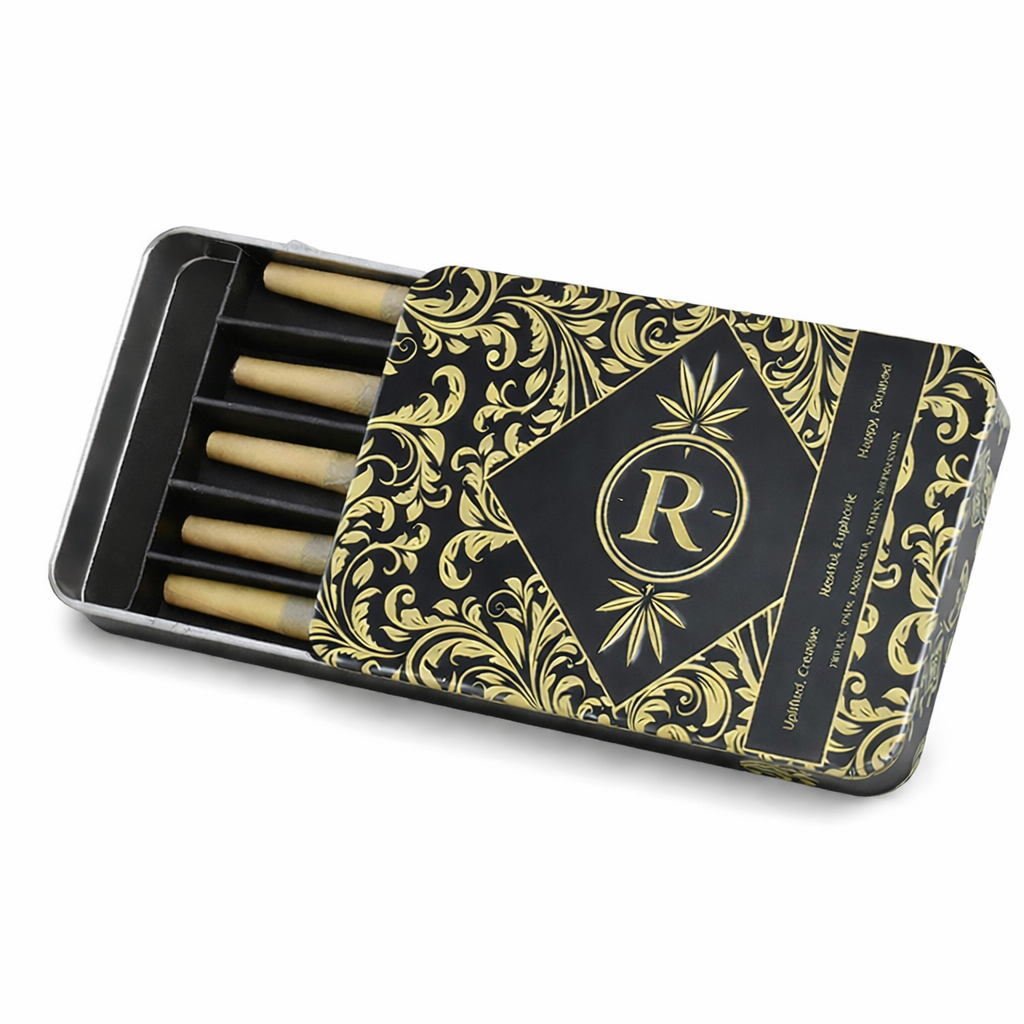
Sliding tins are popular for curated collections, premium pre-roll sets, and multi-strain programs. The slide-out experience feels more intentional and gives the product a higher-end unboxing effect.
They work especially well when the insert design is part of the visual presentation, not just a functional holder.
View Sliding Tin Cases
Round tins are a classic option for gummies, mints, candies, tablets, and small edible products. They are easy to fill, easy to carry, and familiar to consumers.
For edible brands, round tins can balance convenience, reuse value, and strong shelf recognition.
View Round TinsWant to start by browsing real examples? See our metal tin packaging options for sizes, finishes, and ready references.
A good tin case should match the way the product is sold. Before choosing a structure, it helps to start with product type, pack count, and retail positioning.
Pre-roll programs are usually built around pack count. The 5-pack is one of the most common retail formats, while 3-pack and 7/10-pack options are often used for promos, bundles, value packs, or multi-strain collections.
Fit is not only about how many joints the tin holds. Pre-roll length, filter size, diameter, and how tightly the product should sit all matter. If a mold size does not perfectly match the product, custom inserts can tighten the fit, keep items aligned, and reduce movement during shipping.
For pre-roll tins, we usually recommend confirming the actual product dimensions first — especially for 84mm pre-rolls, king-size pre-rolls, cone-style joints, or products with thicker filters.
Paper boxes can be engineered to almost any size. Tin cases are different. Most tin projects work from existing mold sizes, because creating a new tin mold can increase cost, lead time, and development risk.
The good news is that mainstream cannabis pack sizes already have proven tin molds. For most pre-roll and edible programs, the best approach is to choose a reliable exterior tin size first, then use inserts to fine-tune product placement.
Many brands keep the same exterior tin mold across several SKUs, then change the artwork, insert layout, color coding, or printed sleeve. This keeps the packaging system consistent while allowing different strains, flavors, or limited editions.
Inserts keep products secure, organized, and retail-presentable — especially in multi-pack pre-roll tins. The right insert depends on product type, loading speed, odor sensitivity, cost target, and the visual experience you want when the tin opens.
Common for pre-roll tins. Paperboard inserts are lightweight, printable, recyclable, and suitable for odor-sensitive products. They also make it easy to differentiate strains by printed color coding while using the same tin mold.
A practical choice when brands need clean separation, fast loading, and consistent product placement. Tray inserts can be cost-efficient and formed in one step, making them useful for pre-roll and small-format packaging.
EVA or foam inserts offer a snug fit and a more premium display effect, but they are used less often for odor-sensitive cannabis products due to possible odor retention. They are more common in non-odor-sensitive applications.
Tin cases and mylar bags are both useful in cannabis packaging, but they serve different goals. A mylar bag is usually better for low-MOQ, lightweight, flexible, moisture-barrier packaging. A tin case is stronger when the brand wants a reusable, premium, shelf-ready package.
If you’re comparing flexible packaging for pre-rolls or flower, you may also want to review our cannabis mylar bags.
Tin programs follow different production economics than paper boxes or mylar bags. Because tin cases involve metal forming, printing, finishing, assembly, and child resistant mechanism control, volume plays a major role in pricing.
Most custom tin case projects start at around 5,000 units+, depending on size, decoration, insert, and structure.
Pricing usually becomes more competitive at 10,000 units+, especially when using an existing mold and repeatable insert design.
A common approach is to launch with one proven tin size and finish, then expand into more SKUs after the format sells well. This reduces development risk and keeps the first production run easier to manage.
Tin cases have a strong advantage in surface finishing. Even a simple shape can look premium when the finish, logo treatment, and artwork are well controlled.
Adds tactile detail to logos, symbols, and key brand elements.
Helps position the product as clean, bold, playful, or premium.
Creates contrast for logos, strain names, icons, and limited-edition details.
Same mold, different artwork or inserts for strains, flavors, or seasonal drops.
In dispensary channels, packaging does more than protect the product. It helps the customer understand product value before the package is opened. A good tin case should feel intentional from the outside and organized on the inside.
For pre-rolls, the first impression often comes from the pack count, logo placement, insert layout, and how neatly each joint is displayed when the tin opens. For gummies or mints, the focus is usually on portability, freshness, and repeat-use convenience.
This is why tin packaging is often chosen for flagship SKUs, giftable products, higher-margin pre-roll programs, and brands that want stronger shelf recognition.
Child resistant packaging requirements can vary by market, product type, and local regulation. For cannabis retail programs, the opening structure should be reviewed early so the tin case, insert, label area, and product loading method all work together.
If your product is going into a regulated market, confirm the final compliance requirements with your internal compliance team or local advisor before mass production.
Most programs start at 5,000 units+. Pricing typically becomes more competitive at 10,000 units+, especially when using an existing mold.
Tin cases usually rely on existing molds, so sizing is less flexible than paper boxes. Most common pack sizes are already available, and inserts can fine-tune the fit.
Yes. Common options include paperboard inserts, tray or blister inserts, and EVA or foam inserts depending on product requirements, display goals, and odor sensitivity.
Tin cases can help protect and organize the product, but smell control depends on the full packaging system, including inner wrap, liner, seal, product type, and closure design. For strong odor control, the full structure should be reviewed together.
It depends on the program. Tin cases are better for premium reusable packaging and stronger shelf presentation. Mylar bags are usually better for low-MOQ, lightweight, flexible, and cost-sensitive packaging.
Yes. Round child resistant tins are widely used for gummies, mints, and infused candies because they are durable, convenient, reusable, and easy to display.
Paperboard inserts and tray inserts are common for 5-pack pre-roll tins. Paperboard is a good option for printable, recyclable, odor-sensitive packaging, while tray inserts can support faster loading and clean separation.
Yes. Many brands keep the same mold and change artwork, insert color, printed sleeves, labels, or strain-specific graphics across different SKUs.
Metal tins are generally reusable and recyclable, but recycling rules vary by location and by the full packaging construction. If sustainability is part of your brand positioning, insert material and label choice should also be considered.
If you’re curious about the bigger picture — why tin has become such a popular choice in cannabis packaging — here’s a quick read: why cannabis brands prefer child resistant tin packaging .
Already know your product type or pack count? Send us your product type, pack count — 3, 5, 7, or 10 — pre-roll dimensions, and estimated quantity.
We can recommend a proven tin mold, insert approach, decoration direction, and packaging structure that matches your retail goals.